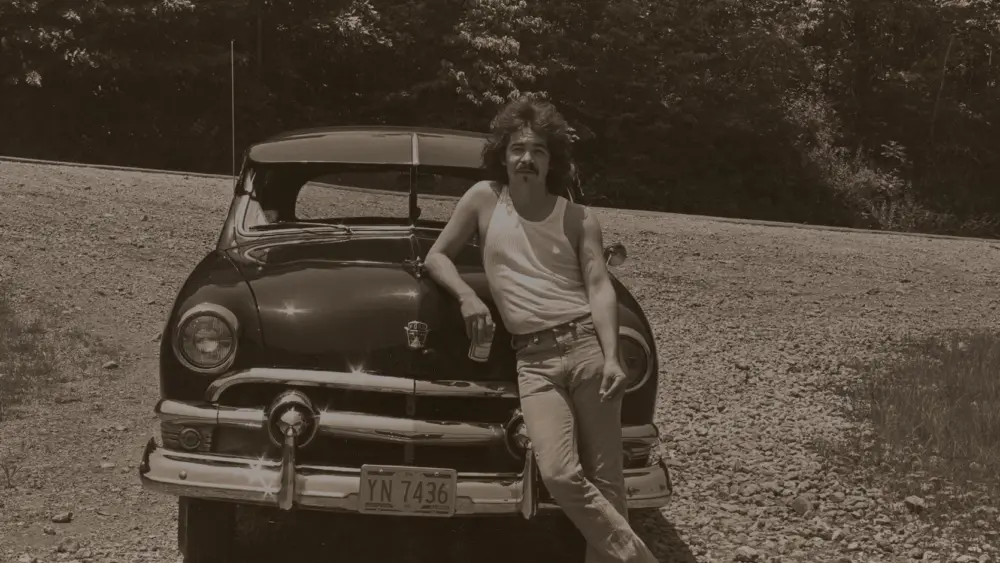
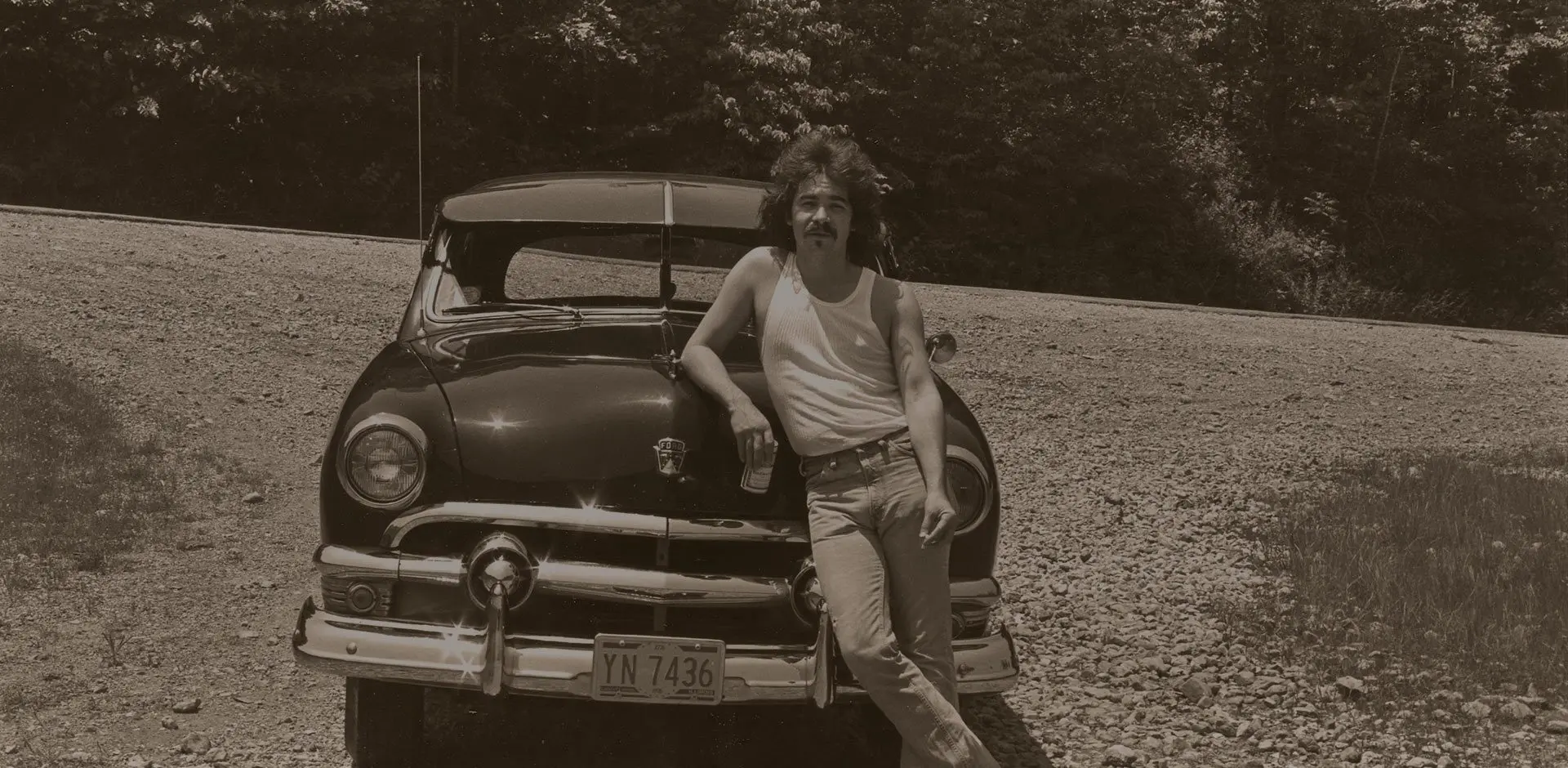
There are great singers. There are great musicians. And then there are songwriters who seem to see the world a little differently than everybody else.
John Prine was one of those songwriters.
Born October 10, 1946, in Maywood, Illinois, Prine became one of the most influential voices in American songwriting — a guy who could make you laugh in one song, break your heart in the next, and somehow make both feel completely natural. His songs could be funny, heartbreaking, political, romantic, observational and brutally honest, sometimes all within the same album.
And the remarkable thing about Prine’s story is that he didn’t start out trying to become a star.
He was a mailman.
Prine learned guitar when he was 14 and studied at Chicago’s Old Town School of Folk Music. After serving in the Army as a vehicle mechanic in West Germany, he returned to Chicago and spent five years delivering mail while writing songs in his head along his route. Eventually, he started performing those songs at open-mic nights around Chicago.
Then somebody noticed.
In 1970, Chicago Sun-Times film critic Roger Ebert happened to hear Prine at the Fifth Peg. Ebert wrote about the “singing mailman” and his ability to tell complete stories with remarkably few words. That review helped put Prine on the map.
Not long after that, Steve Goodman took Kris Kristofferson to see Prine perform.
Kristofferson knew immediately that he was hearing something special.
Prine was only 24, but Kristofferson famously compared the experience to discovering Bob Dylan early in his career. Kristofferson invited Prine to open for him in New York, where Atlantic Records executive Jerry Wexler saw him and signed him to a record deal.
Then came one of the greatest debut albums in American music.
Released in 1971, John Prine introduced the world to songs like “Illegal Smile,” “Sam Stone,” “Paradise,” “Hello in There” and “Angel from Montgomery.” The album has since been widely regarded as one of the greatest albums of all time.
And those songs showed exactly what made Prine different.
“Sam Stone” told the story of a Vietnam veteran struggling with addiction and trauma.
“Angel from Montgomery” looked at loneliness and the feeling of becoming invisible with age.
“Paradise” was rooted in Prine’s family’s connection to Kentucky and the destruction caused by surface mining.
“Hello in There” found heartbreak in the quiet lives of aging people.
Prine wasn’t writing about movie stars or larger-than-life characters. He was writing about people — often people the rest of the world wasn’t paying much attention to.
And apparently, Bob Dylan was paying attention.
Dylan showed up anonymously at one of Prine’s early New York performances and played harmonica behind him. Years later, Dylan would name Prine as one of his favorite songwriters.
Prine’s career continued through the 1970s with albums including Diamonds in the Rough, Sweet Revenge, Common Sense and Bruised Orange. He also demonstrated that he could have a little fun with country music.
He and Steve Goodman co-wrote “You Never Even Called Me by My Name,” the David Allan Coe hit that jokingly attempted to create the “perfect country and western song.” Prine eventually declined songwriting credit, saying he was too drunk when the song was written to remember exactly what he contributed. Goodman used his publishing royalties from the song to buy Prine a jukebox.
That’s pretty much the John Prine story in miniature: incredible songwriting, a great sense of humor and absolutely no need to take himself too seriously.
In 1981, Prine took another important step that would become a major part of his legacy. Frustrated with the traditional record business, he co-founded Oh Boy Records in Nashville. His fans helped fund his next album in advance, allowing Prine to build an independent label that would release his music for the rest of his career.
That independent spirit feels especially important when you look at the generations of artists who came after him.
Prine wasn’t simply admired by younger songwriters. He influenced them.
Jason Isbell. Amanda Shires. Brandi Carlile. Sturgill Simpson. Kacey Musgraves. Margo Price. Tyler Childers.
They are among the artists identified as having been influenced or mentored by Prine.
And his influence reached far beyond country and Americana.
Johnny Cash considered Prine one of the four songwriters he turned to for inspiration, alongside Rodney Crowell, Guy Clark and Steve Goodman.
Roger Waters placed Prine in the same songwriting conversation as artists such as Neil Young and John Lennon.
And Bob Dylan called Prine’s writing extraordinary.
That’s quite a group of people to have in your corner.
Prine’s own career had plenty of major moments, too. His 1991 album The Missing Years won a Grammy. His 2005 album Fair & Square won another Grammy for Best Contemporary Folk Album. In 2016, he received the PEN/Song Lyrics Award alongside Tom Waits and Kathleen Brennan. He was also twice named Americana Artist of the Year.
Then, in 2018, Prine released The Tree of Forgiveness, his first album of new original material in 13 years.
Produced by Dave Cobb, the album featured Jason Isbell, Amanda Shires, Dan Auerbach and Brandi Carlile. It became Prine’s highest-charting album, reaching No. 5 on the Billboard 200.
By then, Prine had already survived cancer twice. In 1998, cancer surgery and radiation significantly changed his voice. In 2013, he underwent surgery for lung cancer and eventually returned to touring.
He kept going.
His final recording session came in 2019.
Then came the COVID-19 pandemic.
Prine was hospitalized after developing COVID-19 symptoms and died on April 7, 2020, at the age of 73. Earlier that same year, he had received the Grammy Lifetime Achievement Award.
But John Prine’s story didn’t end there.
His songs kept traveling.
They were recorded by generations of artists. His influence continued showing up in the work of younger songwriters. And the final recording he made, “I Remember Everything,” was released after his death. It became part of a national memorial honoring those lost during the pandemic.
Prine ultimately won four Grammy Awards from 13 nominations, along with the Grammy Lifetime Achievement Award.
But awards don’t really explain John Prine.
His legacy is better measured by the number of songwriters who picked up a guitar and realized they didn’t have to write about perfect people.
They could write about the lonely guy at the bar.
The old couple nobody notices.
The Vietnam veteran trying to put his life back together.
The hometown that’s disappearing.
The person who got left behind.
The ridiculous things people do when they’re in love.
John Prine understood that ordinary people could make extraordinary songs.
And maybe that’s why his music still feels so timeless.
He wasn’t trying to write songs that sounded important.
He was trying to tell the truth — sometimes with a laugh, sometimes with a tear, and almost always with a line you wished you’d thought of yourself.
That’s John Prine.
And that’s why songwriters are still listening.